Positioning, Orthodontic, Anatomical or Dynamic Dummy? What the Labels Mean (for Parents)

You’ve probably stood in the baby aisle thinking: “Why does the same dummy come in totally different descriptions?” Orthodontic. Anatomical. Dynamic. And sometimes a label you don’t see often: positioning dummy.
Here is the answer to the title question straight away: these terms do not necessarily form mutually exclusive or fully standardised categories. The same dummy can be described in overlapping ways by different manufacturers, and the wording may focus on different design ideas (teat shape, orientation, materials, or how the teat is intended to move).
What matters most for parents is that you can interpret the label - and then verify the practical details in photos, instructions and the product description.
Why teat labels are confusing
Most labels are shorthand for design intentions, not official medical categories. Two brands can both use the word “orthodontic” but mean slightly different geometry - for example, a flatter lower surface, a particular orientation, or where the teat sits in the mouth during sucking.
Also, dummy designs are made from different materials and thicknesses. That affects how the teat feels and behaves in the mouth. So a label may describe:
- Teat geometry (shape, length, symmetry, bottom contour)
- Orientation (how the teat is meant to sit - and how it’s naturally held)
- Material behaviour (how it compresses or flexes during sucking)
- Manufacturer-specific design concepts (how the brand explains the “goal” of the design)
If you’re comparing products quickly, it helps to separate those four areas. The label may be talking about only one of them.
Quick comparison: what labels often describe
| Label you see on packaging | What it often refers to | What you can check in the listing or photos |
|---|---|---|
| Round / cherry | More traditional, symmetrical geometry | Top and bottom look similarly rounded; less obvious “flat” areas |
| Orthodontic | Teat geometry that differs top vs bottom (often a flatter underside) | Is the lower surface flatter? Does the profile look designed to sit differently? |
| Anatomical | Breast/nipple-inspired feel and asymmetry | Is the teat shaped to feel different when placed in the mouth? Is it more breastlike in profile? |
| Dynamic | Intended movement, flex, or “adapting” behaviour during sucking | Does the description mention expansion/contraction or a flexing element? |
| Positioning | Intended internal goal during use (where the tongue rests/space for tongue) | Does the brand clearly describe tongue space and tongue resting position as the design aim? |
What to verify in product descriptions
When a label is vague, you can still learn a lot. Here are practical checks that work well for parents shopping online or in-store:
- Look for geometry terms. Words like “flat bottom”, “symmetrical”, “asymmetrical”, “rounded top”, “breast-like” are clues about teat construction.
- Check for orientation cues. Some descriptions explain how the teat is designed to sit - for example, “always positioned to…” or “meant to…”
- Read material/behaviour language. If “dynamic” is mentioned, do they describe how the teat changes under sucking?
- Separate “intended function” from proven outcomes. Manufacturer wording often explains a design goal, not guaranteed clinical results.
Quick tip: If your baby repeatedly spits the dummy out, seems to clamp or chew rather than suck rhythmically, or pulls it out quickly after it’s inserted, re-check both size and whether the teat shape seems to suit your baby’s mouth. Comfort and fit can change acceptance as much as the label.
Round and symmetrical (often called cherry)
A round dummy teat is often described as cherry or a simple rounded shape. In many cases, it is relatively symmetrical - rounded at the top and bottom.
How to interpret that label: A cherry/round description usually focuses on geometry, and less on positioning goals. That doesn’t mean it is automatically “wrong” for a baby; it may simply mean the manufacturer is not emphasising tongue space or specific palate outcomes in their design explanation.
What to check: Compare the profile. Is there a noticeable flat underside or specialised top contour? If not, it’s likely mainly a traditional geometry label rather than a positioning concept.
Orthodontic vs anatomical: what these labels usually mean
Orthodontic dummy labels
“Orthodontic” typically suggests a teat profile with different contouring (often a flatter underside with a rounded top). The intention is usually to encourage a particular fit in the mouth during sucking - rather than simply being a comfortable round teat.
Important for parents: You can’t assume orthodontic-labelled designs will prevent every type of bite issue in every child. Growth patterns, sucking habits, and timing all vary. Think of “orthodontic” as the brand’s design aim, not a guaranteed result.
Anatomical dummy labels
“Anatomical” is commonly used to describe a teat shape meant to feel closer to the breast or nipple - often with an asymmetrical profile. The label usually refers to feel and geometry, and sometimes how it sits in the mouth.
What you can verify: In the product photos or drawings, look for a profile that’s more “breast-like” rather than a fully symmetrical circle. If the listing only says “anatomical” without describing the shape, you may need to rely on the visual profile.
If you are choosing for a breastfed baby, don’t over-focus on the label alone. Babies learn feeding patterns through comfort and consistency. If acceptance is hard, a slow introduction and a good fit often matter more than matching one specific word on the packet.
Dynamic labels: teat movement and intended sucking experience
“Dynamic” is usually the label most likely to include manufacturer-specific language. You might see claims about the teat “adapting” or “moving” with sucking - for example, expanding, contracting, or flexing as the baby sucks.
How to interpret “dynamic” safely: Do not treat dynamic as a universally defined construction. Different brands may mean different mechanics. Also, don’t infer clinical superiority from the word “dynamic”. At best, it tells you what the manufacturer designed the teat to do in the mouth.
What to check in the product description: Look for concrete wording like “flexes”, “expands”, “contracts”, or an explanation of how the teat behaviour is intended to match sucking rhythm. If there is no description, the label may be mostly marketing shorthand.
Positioning dummy: what LUU Kids means by “positioning”
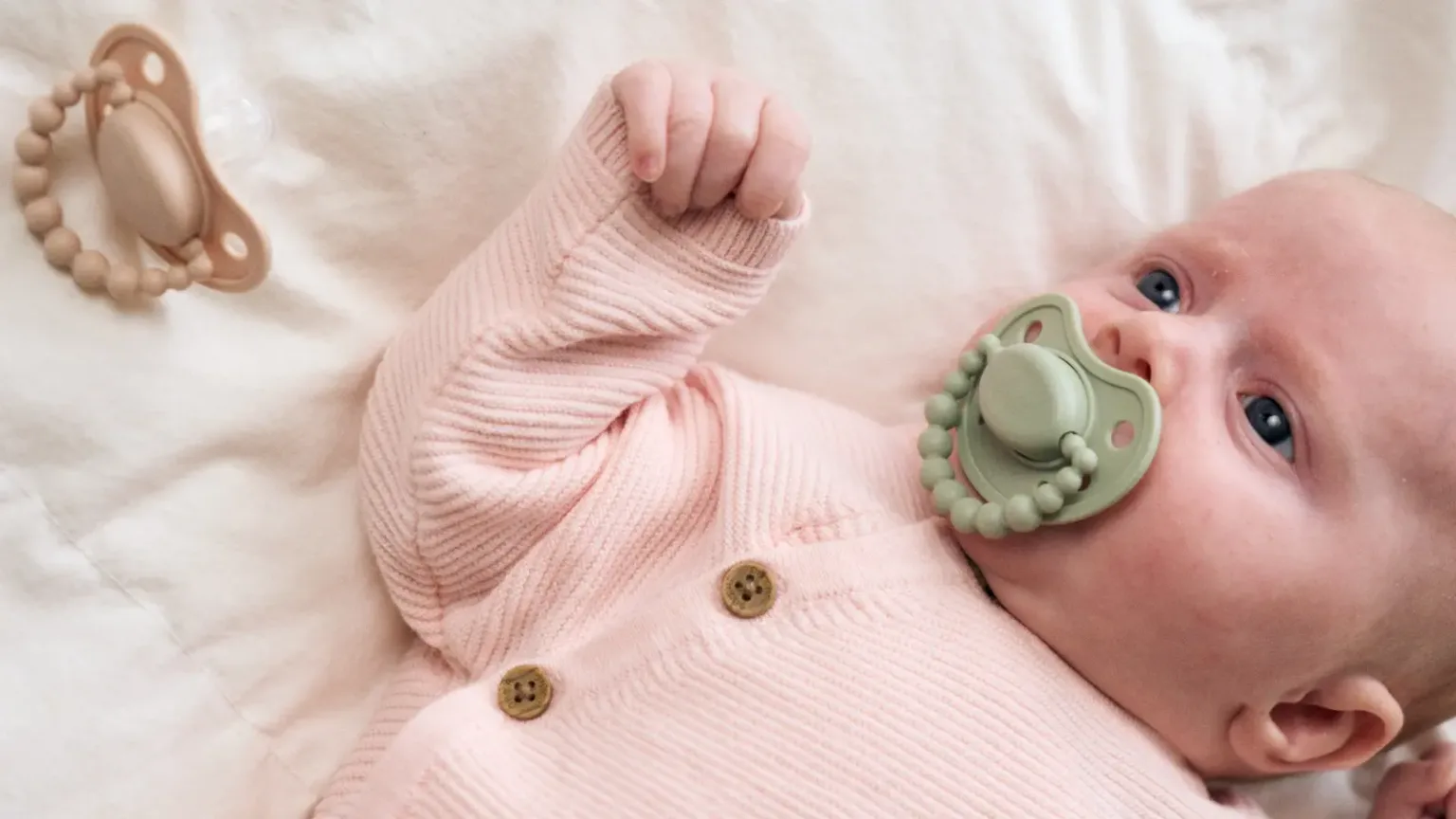
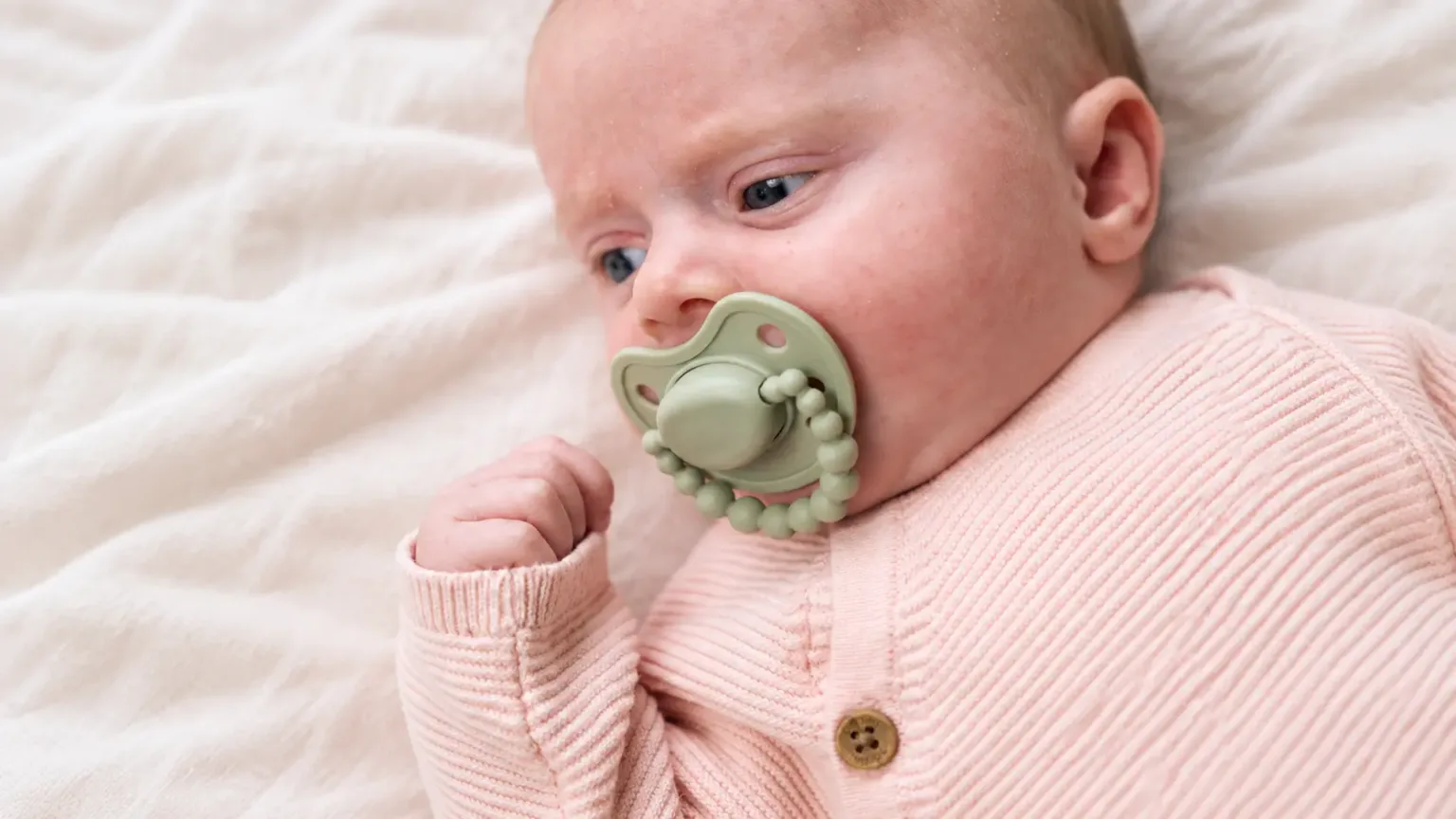
LUU Kids uses the term positioning to describe a design approach built around the inside-of-the-mouth goal of supporting proper tongue resting position.
According to LUU’s current product documentation and brand explanation for its positioning pacifiers, the distinctive feature is the proprietary nipple shape, designed to give the tongue more space in the oral cavity. The intended effect is to support comfortable tongue rest while the baby uses the pacifier.
How to connect features to intentions (without over-claiming outcomes):
- Distinctive nipple construction - intended to create tongue space and support the tongue resting position.
- Age-appropriate sizes - intended to keep the pacifier fitting well as the baby’s mouth changes.
- Lightweight, stage-appropriate design (for the earliest stage) - intended to help comfort and ease of use for newborns.
What LUU documentation explains as the design intention is different from any independently proven clinical impact. In everyday terms: the brand focuses on how the product is designed to sit and how the tongue is intended to have space, rather than claiming a specific health outcome for every child.
Practical tip: When reading a listing, highlight the sentence that explains the design goal. If it says “positioning”, look for a description of tongue space or tongue resting. If it only shows a shape photo with no explanation, you may still compare the geometry, but you’ll have less clarity about the manufacturer’s mechanism.
How tongue rest connects to the palate and oral arch
Inside a young child’s mouth, the tongue’s resting position is one reason that pacifier design can matter to parents who are thinking ahead about oral development.
Because a baby’s upper palate is still soft and shaping, a tongue that rests comfortably can help support how the roof of the mouth is being shaped during development. When the tongue is cramped or pushed into a less comfortable position, the “resting” contact can be different.
That is why a positioning approach focuses on giving the tongue space, rather than only on appearance. It’s also why you should interpret labels as mechanism hypotheses, not guaranteed outcomes.
Sizing matters as much as shape
Even a well-designed teat can be unhelpful if it’s the wrong size. Babies change quickly. If the pacifier is too small, it may feel like it sits “wrong” and encourages different tongue/jaw patterns. If it’s too large, acceptance can drop and the baby may work harder to keep it in place.
LUU positioning pacifiers are designed in stage-appropriate versions. In simple terms, that means you can choose based on your baby’s age range and expected oral size:
- 0-3 months: the earliest stage, with a smaller and lightweight design intended for comfort for newborn mouths.
- 3-6 months: adapted for the next stage as sucking patterns and oral size change.
- 6m+: continued positioning concept with a size suited for older infants.
Quick self-check: If your baby repeatedly pushes the dummy out, seems distressed during use, or spends more time struggling to hold it than sucking comfortably, consider re-checking size and fit before assuming your baby simply refuses pacifiers.
Does a dummy affect teeth or breastfeeding?
Will a dummy affect teeth?
Parents often worry about alignment issues such as an open bite. The honest answer is that you cannot predict an individual child’s outcome from a label alone. For more on open bite, crossbite and the role of prolonged dummy use, read our guide to how dummies affect tongue position and bite development.
What you can do as a parent is choose a dummy that fits well, supports comfortable tongue rest (if that’s your goal), and follow sensible routine guidance. For sleep safety, stick to the latest advice from UK organisations such as The Lullaby Trust and your healthcare professional.
What about breastfeeding?
Many parents think “anatomical” sounds closer to breastfeeding. It can - because it may aim for a breastlike feel. But the bigger practical point is comfort and consistency. If you’re introducing a dummy later, or switching type, do it gradually. Babies often need time to adjust to new sucking patterns. If you’re unsure when to introduce one, read our guide to when to introduce a dummy to a breastfed baby and signs breastfeeding is established.
How to choose when information is unclear
Sometimes the packaging tells you very little. If you’re unsure, use these questions - they work whether you’re comparing round, orthodontic, anatomical, dynamic or positioning-style dummies.
- Which part of the mouth is the label trying to influence? Tongue space, tongue rest, feel/fit, or sucking behaviour?
- What is the teat shape described as? Look for geometry clues like flat underside, asymmetry, or breastlike profile.
- Does the description explain “dynamic” mechanics? If there is no explanation, treat it as less informative.
- Is the size clearly matched to age? If the listing doesn’t give guidance, follow reputable age guidance from the manufacturer and check your baby’s comfort.
- Does the photo show the orientation? If it’s meant to be used in a specific way, the images and instructions should reflect that.
If you find yourself stuck between two options, you can also trial based on comfort and fit. Parents often end up choosing by what their baby accepts - but keep an eye on whether the teat seems to limit tongue space or cause frequent rejection.
Your next step
If you want a positioning-focused option designed around tongue space and proper tongue resting position, LUU Kids’ LUU positioning pacifiers come in stage-appropriate versions (0-3 months, 3-6 months, and 6m+). Choosing with both label meaning and fit in mind can make the whole process feel a lot more straightforward.
FAQ
Do positioning, orthodontic, anatomical and dynamic dummies mean the same thing?
No. They usually describe different design intentions, such as teat geometry, tongue-space goals, or intended movement during sucking. Labels can overlap and are not always standardised between brands.
Is “dynamic” always better or more clinically effective?
No. “Dynamic” is not a universally defined construction. It tells you the brand’s intended teat behaviour, but it does not automatically mean better oral development outcomes for every child.
Can a cherry or round dummy still be a good choice?
It can be, especially if your baby accepts it comfortably. If you’re specifically aiming to support tongue rest and tongue space, you may prefer a teat designed around a positioning goal.
What should I look for if a product claims tongue positioning?
Look for an explanation of how the design supports tongue space or tongue resting position, not just a shape photo. Also check age-appropriate sizing guidance and whether the pacifier fits comfortably.
How do I know if I need to size up?
If your baby struggles to keep the dummy in, seems uncomfortable, or keeps pushing it out, it may indicate the fit no longer matches their stage. Re-check the age range guidance for the specific pacifier and consider trying the next size.